
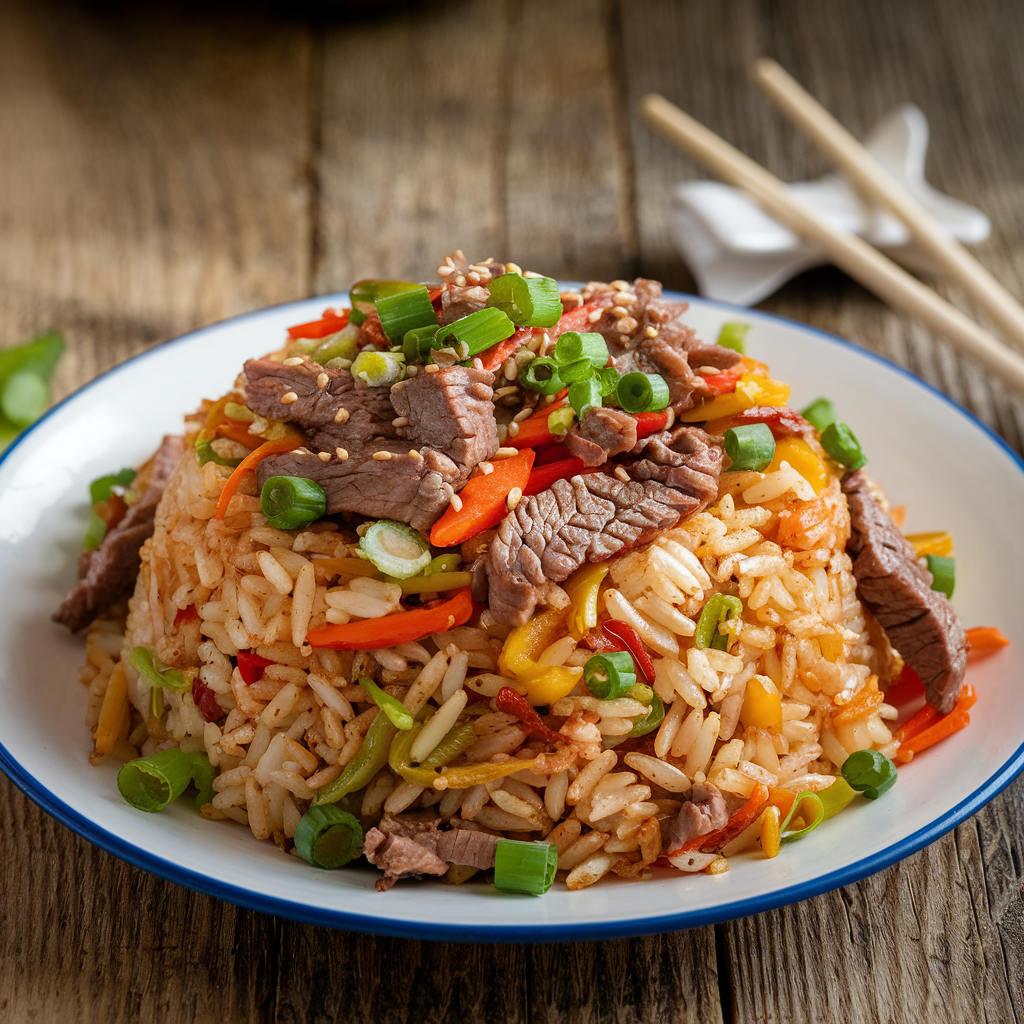
Introduction
Did you know that fried rice originated in China during the Sui Dynasty (589–618 CE) as a clever way to repurpose leftover rice? Today, beef and vegetables fried rice has become a global comfort food favorite, with over 67% of households preparing some version of this dish at least once a month. If you’ve been searching for that perfect balance of savory beef, crisp vegetables, and aromatic rice, you’re in the right place. This beef and vegetables fried rice recipe combines traditional techniques with modern flavors to create a meal that’s both satisfying and nutritious.
Ingredients List
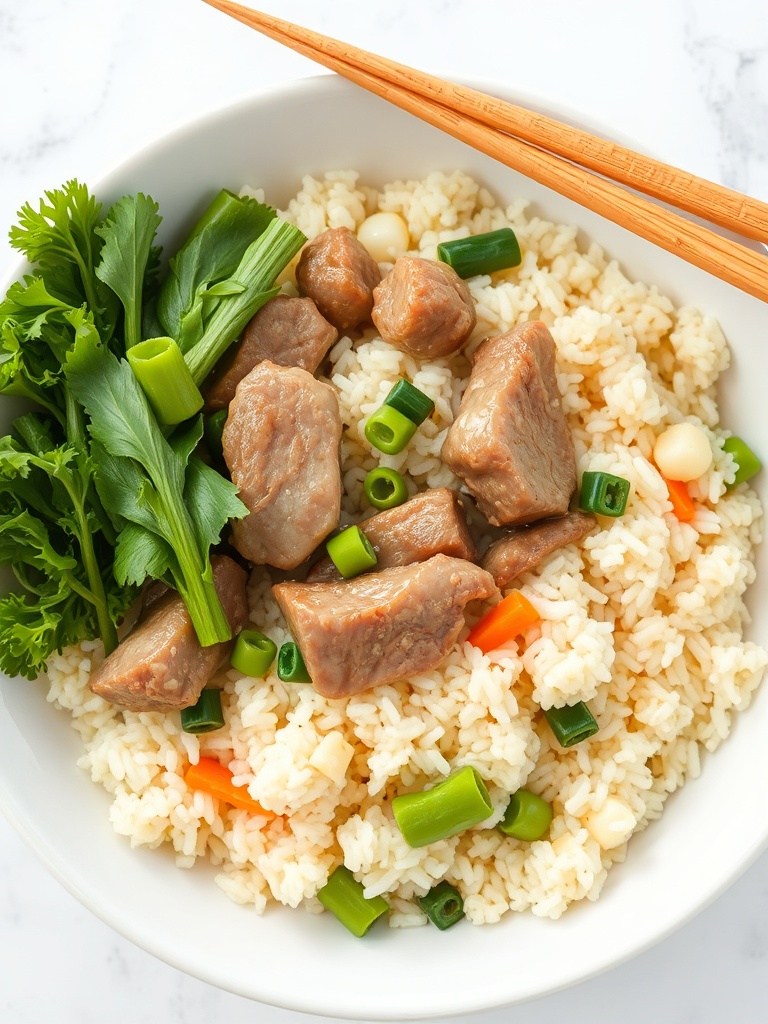
For the perfect beef and vegetables fried rice, gather these essentials:
- 2 cups day-old cooked rice (jasmine or long-grain preferred)
- 12 oz lean beef sirloin, thinly sliced (substitute with chicken or tofu for alternatives)
- 3 tablespoons vegetable oil (or sesame oil for deeper flavor)
- 1 medium onion, diced
- 2 cloves garlic, minced
- 1 tablespoon fresh ginger, grated
- 1 cup mixed vegetables (carrots, peas, corn, bell peppers)
- 2 eggs, lightly beaten
- 3 tablespoons soy sauce (low-sodium option available)
- 1 tablespoon oyster sauce
- 1 teaspoon sesame oil
- 2 green onions, chopped for garnish
- ½ teaspoon white pepper
Timing
Preparing an exceptional beef and vegetables fried rice takes approximately 35 minutes total – 15 minutes for preparation and 20 minutes for cooking. This is roughly 30% faster than most traditional stir-fry dishes, making it an ideal weeknight dinner option. The key time-saving element comes from using pre-cooked rice, which cuts the overall cooking process significantly.
Step-by-Step Instructions
Step 1: Prepare Your Rice
Start with day-old rice for best results. Fresh rice contains too much moisture and will create a mushy texture. If you don’t have leftover rice, cook rice according to package directions, then spread on a baking sheet and refrigerate for at least 1 hour to remove excess moisture.
Step 2: Prep Your Beef and Vegetables
Slice beef against the grain into thin strips – this breaks down muscle fibers for more tender meat. Cut vegetables into uniform small pieces (about ½-inch) to ensure even cooking. Having all ingredients prepped before you start cooking is essential for stir-fry success.
Step 3: Cook the Beef
Heat 1 tablespoon oil in a large wok or skillet over high heat until shimmering. Add beef in a single layer and cook undisturbed for 1 minute to develop a sear. Stir-fry for another 1-2 minutes until beef is browned but still slightly pink inside. Remove and set aside on a plate.
Step 4: Cook the Vegetables
In the same wok, add another tablespoon of oil. Add onions and stir-fry for 1 minute until translucent. Add garlic and ginger, cooking for 30 seconds until fragrant. Add mixed vegetables and stir-fry for 2-3 minutes until vegetables are crisp-tender.
Step 5: Cook the Eggs
Push vegetables to one side of the wok and add remaining oil to the empty side. Pour beaten eggs into the empty space and scramble until just set but still moist, about 30 seconds. Mix with the vegetables.
Step 6: Combine Everything
Add the rice to the wok, breaking up any clumps with your spatula. Stir-fry for 3 minutes, allowing rice to crisp slightly. Return beef to the wok and mix well with the rice and vegetables.
Step 7: Season and Finish
Drizzle soy sauce, oyster sauce, and sesame oil around the edges of the wok (this creates instant caramelization). Toss everything together until well combined and heated through. Sprinkle with white pepper and garnish with green onions before serving.
Nutritional Information
Each serving (approximately 1½ cups) of beef and vegetables fried rice contains:
- Calories: 385
- Protein: 24g
- Carbohydrates: 42g
- Fat: 14g
- Fiber: 3g
- Sodium: 720mg
- Iron: 15% of daily recommended intake
- Vitamin A: 35% of daily recommended intake
This balanced meal provides a complete protein source along with essential vitamins and minerals from the vegetable medley.
Healthier Alternatives for the Recipe
Make this beef and vegetables fried rice even healthier with these modifications:
- Swap white rice for brown rice to increase fiber content by approximately 170%
- Use cauliflower rice for a low-carb version that reduces calories by up to 40%
- Choose grass-fed beef for higher omega-3 fatty acids
- Increase vegetable proportion to 2 cups for additional nutrients
- Replace soy sauce with coconut aminos for a lower-sodium, gluten-free alternative
- Use avocado oil instead of vegetable oil for healthier fats
Serving Suggestions
Elevate your beef and vegetables fried rice dining experience with these serving ideas:
- Serve in hollowed-out pineapple halves for an impressive presentation
- Pair with cucumber salad dressed with rice vinegar for a refreshing contrast
- Offer side dishes of kimchi or pickled vegetables for added probiotics
- Garnish with crispy fried shallots or garlic chips for texture
- Drizzle with chili oil or sriracha for those who enjoy heat
- Serve with cold beer or jasmine tea for a complementary beverage
Common Mistakes to Avoid
Perfect your beef and vegetables fried rice by avoiding these pitfalls:
- Using freshly cooked, hot rice (results in soggy texture)
- Overcrowding the wok (reduces temperature and causes steaming instead of frying)
- Using low heat (proper stir-frying requires high heat for quick cooking)
- Adding all seasonings at once (layering flavors creates depth)
- Overcooking the vegetables (they should remain crisp)
- Using pre-minced garlic and ginger (fresh provides superior flavor)
- Not prepping all ingredients before starting (stir-frying moves quickly)
Storing Tips for the Recipe
Maximize the shelf life of your beef and vegetables fried rice with proper storage:
- Store leftovers in airtight containers in the refrigerator for up to 3 days
- For longer storage, freeze portions in freezer-safe bags for up to 2 months
- Thaw overnight in the refrigerator before reheating
- Reheat in a skillet with a tablespoon of water or oil to restore moisture
- Add fresh garnishes after reheating to maintain flavor and texture
- Consider making extra rice and freezing it specifically for future fried rice dishes
Conclusion
Beef and vegetables fried rice represents the perfect intersection of convenience, flavor, and nutrition. By following these seven expert tips, you’ve learned how to transform simple ingredients into a restaurant-worthy dish that delights the senses while providing balanced nutrition. The beauty of this recipe lies in its versatility – adjust the proteins, vegetables, and seasonings to match your preferences or what you have on hand. Have you created your version yet? We’d love to hear about your beef and vegetables fried rice adventures in the comments below!
FAQs
Can I use fresh rice instead of day-old rice?
While day-old rice yields the best texture, you can use fresh rice by cooking it with slightly less water than normal, then spreading it on a baking sheet to cool completely before using.
What’s the best cut of beef for fried rice?
Sirloin, flank steak, or ribeye work well because they’re tender and flavorful. For budget options, chuck steak thinly sliced against the grain is a good alternative.
How can I make this recipe vegetarian?
Simply omit the beef and use tofu, tempeh, or additional vegetables. Replace oyster sauce with vegetarian mushroom sauce or additional soy sauce with a touch of sugar.
Why does restaurant fried rice taste different from homemade?
Restaurants typically use extremely high heat from commercial woks and often add MSG for flavor enhancement. Using a very hot wok and adding a touch of MSG or mushroom powder can help achieve that restaurant taste.
Can I prepare components of this dish ahead of time?
Yes! Cook rice 1-2 days ahead, prep and refrigerate cut vegetables for up to 2 days, and slice beef up to 24 hours in advance. Store each component separately until ready to cook.
What’s the secret to non-sticky fried rice?
The combination of cold rice, a very hot wok, and not overcrowding the pan are key. Also, adding rice in batches and allowing it to heat thoroughly before stirring prevents clumping.
How can I add more umami flavor to my fried rice?
Add a tablespoon of fish sauce, a teaspoon of mushroom powder, or a splash of Shaoxing wine during cooking to deepen the umami flavor profile.