
Introduction
Did you know that 80% of Americans don’t consume enough fiber in their daily diet, despite its proven benefits for gut health, weight management, and disease prevention? If you’re caught in the lunchtime rut, struggling to find options that are both convenient and nutritious, High Fiber Salad Jar recipes offer the perfect solution. These portable, prep-ahead meals combine layers of nutrient-dense vegetables, proteins, and fiber-rich ingredients in a visually appealing and practical format. With high fiber salad jar recipes, you can easily boost your daily fiber intake while enjoying delicious, satisfying meals that keep you energized throughout the afternoon. Let’s explore seven incredible fiber-packed recipes that will revolutionize your lunch routine!
Ingredients List
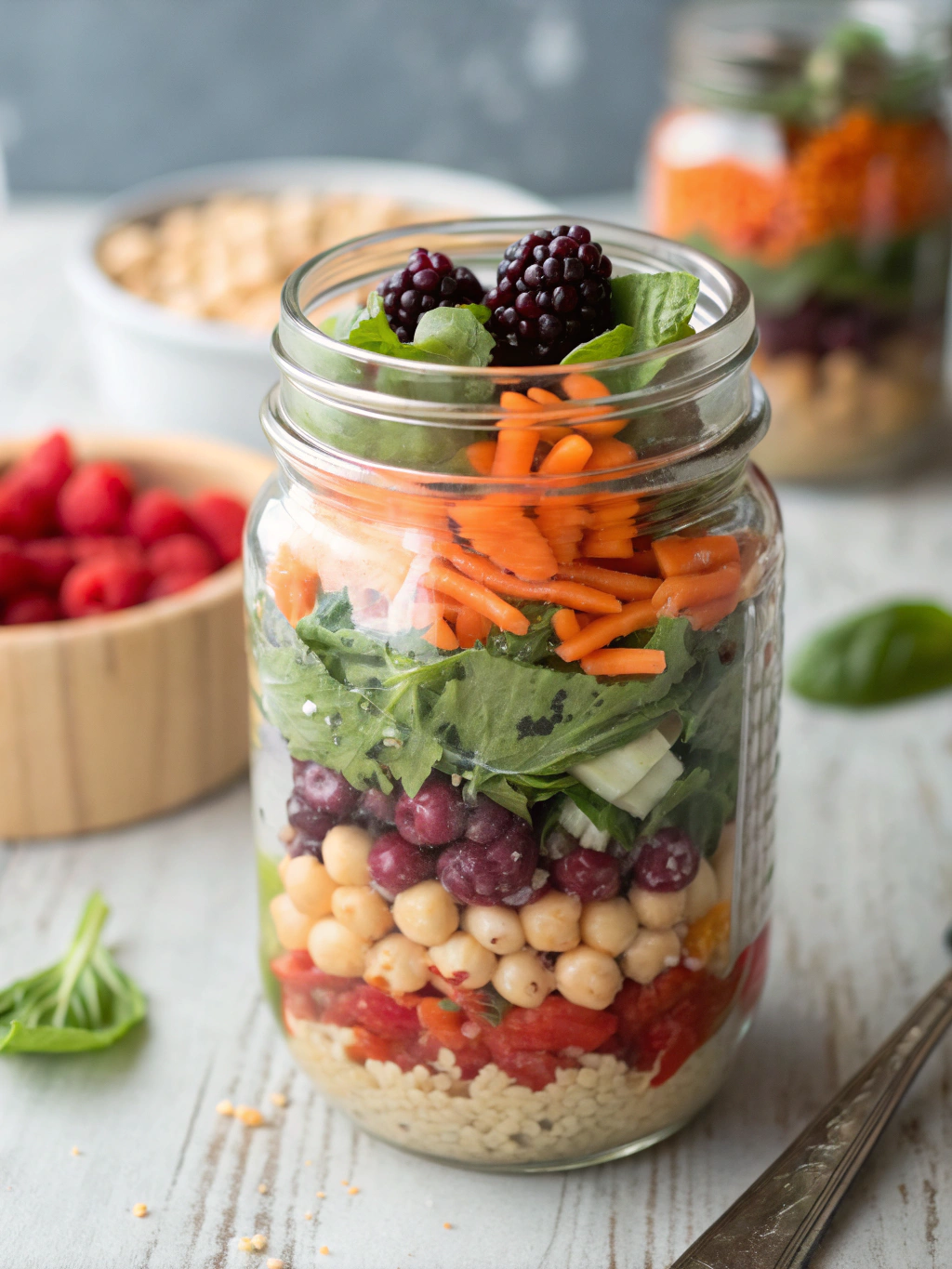
For these seven High Fiber Salad Jar recipes, you’ll need a variety of fiber-rich foundations:
Base ingredients (for all recipes):
- Mason jars (16 oz or quart-sized)
- Dressing of choice (homemade preferred to control ingredients)
Fiber-rich staples:
- Leafy greens: spinach, kale, arugula, mixed greens
- Cruciferous vegetables: broccoli, cauliflower, brussels sprouts
- Legumes: chickpeas, black beans, lentils, edamame
- Whole grains: quinoa, farro, brown rice, barley
- Seeds and nuts: chia seeds, flax seeds, hemp hearts, sliced almonds, walnuts
- Fruits: berries, apples, pears (high in soluble fiber)
- Avocado (provides healthy fats and fiber)
Substitution options:
- Gluten-free: Use rice, quinoa, or certified gluten-free oats instead of wheat-based grains
- Nut allergies: Replace nuts with seeds or crispy chickpeas for crunch
- Vegan: Substitute animal proteins with tofu, tempeh, or additional legumes
Timing
Preparation Time: 15-20 minutes per jar (75% less time than preparing individual meals daily)
Cooking Time: 10-15 minutes (for grains and proteins that require cooking)
Total Time: 30-40 minutes
Weekly Meal Prep: Spend 60-90 minutes on Sunday to prepare 5-7 jars, saving approximately 5 hours of weekday food preparation
Storage Duration: Properly prepared salad jars remain fresh for 4-5 days in the refrigerator
Step-by-Step Instructions
Step 1: Prepare Your Jars
Start with clean, dry mason jars with tight-fitting lids. The 16 oz size works well for side salads, while quart-sized jars create satisfying main meals. Pro tip: Use wide-mouth jars for easier packing and eating.
Step 2: Layer Your Dressing
Pour 1-2 tablespoons of dressing at the bottom of each jar. This strategic placement prevents soggy greens and ensures every ingredient gets coated when you shake the jar before eating. For oil-free options, try a hummus-based dressing or vinegar with herbs.
Step 3: Create Your Protection Layer
Add hard vegetables that won’t absorb the dressing directly above it: cherry tomatoes, bell peppers, carrots, cucumbers, radishes, or celery. This critical barrier keeps other ingredients fresh for days.
Step 4: Pack In Proteins and Grains
Next, add your protein sources (chickpeas, beans, tofu, chicken, tuna) and pre-cooked grains. These dense ingredients help maintain the jar’s structural integrity and provide staying power to keep you full.
Step 5: Add More Fiber Boosters
Layer in additional fiber-rich ingredients like shredded cabbage, roasted vegetables, or fruit. For the Mediterranean jar, add artichoke hearts and olives; for the Mexican-inspired jar, include corn and black beans.
Step 6: Top With Greens and Delicate Items
Fill the remaining space with leafy greens and finish with nuts, seeds, or dried fruits. The beauty of this method is that these delicate ingredients stay fresh because they never touch the moisture.
Step 7: Seal and Store
Screw on lids tightly and refrigerate. For maximum freshness, press out excess air before sealing. Your colorful fiber-packed lunch solutions are ready to grab and go throughout the week!
Nutritional Information
Each High Fiber Salad Jar recipe contains approximately:
- Calories: 300-450 calories (depending on protein choices and dressing)
- Fiber: 12-15 grams (40-50% of the daily recommended intake)
- Protein: 15-20 grams
- Carbohydrates: 30-45 grams (primarily from vegetables, fruits, and whole grains)
- Fat: 12-18 grams (predominantly healthy unsaturated fats)
- Sodium: 300-500mg (significantly less than commercial lunch options)
These nutrient-dense meals offer balanced macronutrients while focusing on maximizing fiber intake for digestive health and satiety.
Healthier Alternatives for the Recipe
- Lower calorie version: Use lemon juice and vinegar-based dressings instead of oil-heavy options
- Reduced sodium option: Replace olives and pickled vegetables with fresh alternatives and use herbs instead of salt for flavoring
- Higher protein variation: Add an extra ounce of lean protein or supplement with Greek yogurt-based dressings
- Keto-friendly adaptation: Increase non-starchy vegetables and healthy fats while reducing grain content
- Grain-free option: Replace quinoa and other grains with cauliflower rice or additional vegetables
Serving Suggestions
- Invert your jar into a bowl 10-15 minutes before eating to allow dressing to distribute
- Pack a small side of whole grain crackers or a piece of fruit for a more substantial meal
- For office lunches, keep a bottle of hot sauce or lemon wedges at work to add fresh flavor
- Pair with a warm cup of broth or tea during colder months for a more comforting meal experience
- For dinner adaptation, warm the protein and grain components before adding to the fresh ingredients
Common Mistakes to Avoid
- Improper layering: Placing delicate ingredients near dressing leads to soggy salads – always follow the layering order
- Overpacking: Compressing ingredients too tightly prevents proper dressing distribution when shaken
- Insufficient protein: Without adequate protein, these salads won’t keep you satisfied until dinner
- Using wet ingredients: Thoroughly dry all components after washing to prevent premature spoilage
- Cutting avocado in advance: Add avocado the morning you plan to eat the salad or use a lemon juice treatment to prevent browning
Storing Tips for the Recipe
- Store jars upright to maintain the separation between dressing and delicate ingredients
- Place a small piece of paper towel above leafy greens to absorb excess moisture
- For maximum freshness, partially prepare jars by leaving out quick-spoiling items like avocados or apples until the day of consumption
- Vacuum-sealed jars can extend freshness by an additional 1-2 days
- If freezing components separately, allow them to thaw in the refrigerator overnight before assembling
Conclusion
These seven High Fiber Salad Jar recipes transform ordinary lunches into nutrient powerhouses that support your digestive health, energy levels, and overall wellbeing. By investing minimal preparation time, you gain a week of ready-to-eat meals that deliver approximately 40-50% of your daily fiber needs in one delicious package. The versatility of these recipes allows endless customization while maintaining the core benefits of high-fiber ingredients. Start your meal prep journey this weekend, and you’ll never look at lunch the same way again. Have you tried making salad jars before? Share your favorite combinations in the comments below or tag us in your colorful creations on social media!
FAQs
How long do salad jars really stay fresh?
When properly layered and sealed, High Fiber Salad Jars typically remain fresh for 4-5 days in the refrigerator. The key is keeping the dressing isolated from the greens and ensuring all ingredients are thoroughly dried before assembly.
Can I use regular bowls instead of jars?
While you can prepare similar layered salads in containers, mason jars offer unique benefits: they’re leakproof, preserve freshness longer due to their airtight seal, and their vertical design keeps ingredients properly separated until eating time.
What’s the best way to eat from a salad jar?
Either shake the jar vigorously to distribute dressing and pour onto a plate, or invert the jar into a bowl 10-15 minutes before eating to allow dressing to naturally coat all ingredients.
How can I ensure I’m getting enough fiber from these recipes?
Each jar contains approximately 12-15g of fiber. For maximum benefit, include at least 2-3 high-fiber components such as legumes, whole grains, seeds, and cruciferous vegetables in every jar.
Are these recipes suitable for weight loss?
Yes! These nutrient-dense, fiber-rich meals promote satiety, potentially reducing overall calorie intake. The balanced macronutrient profile supports metabolic health, while the convenience factor helps maintain consistent healthy eating patterns.