
Introduction
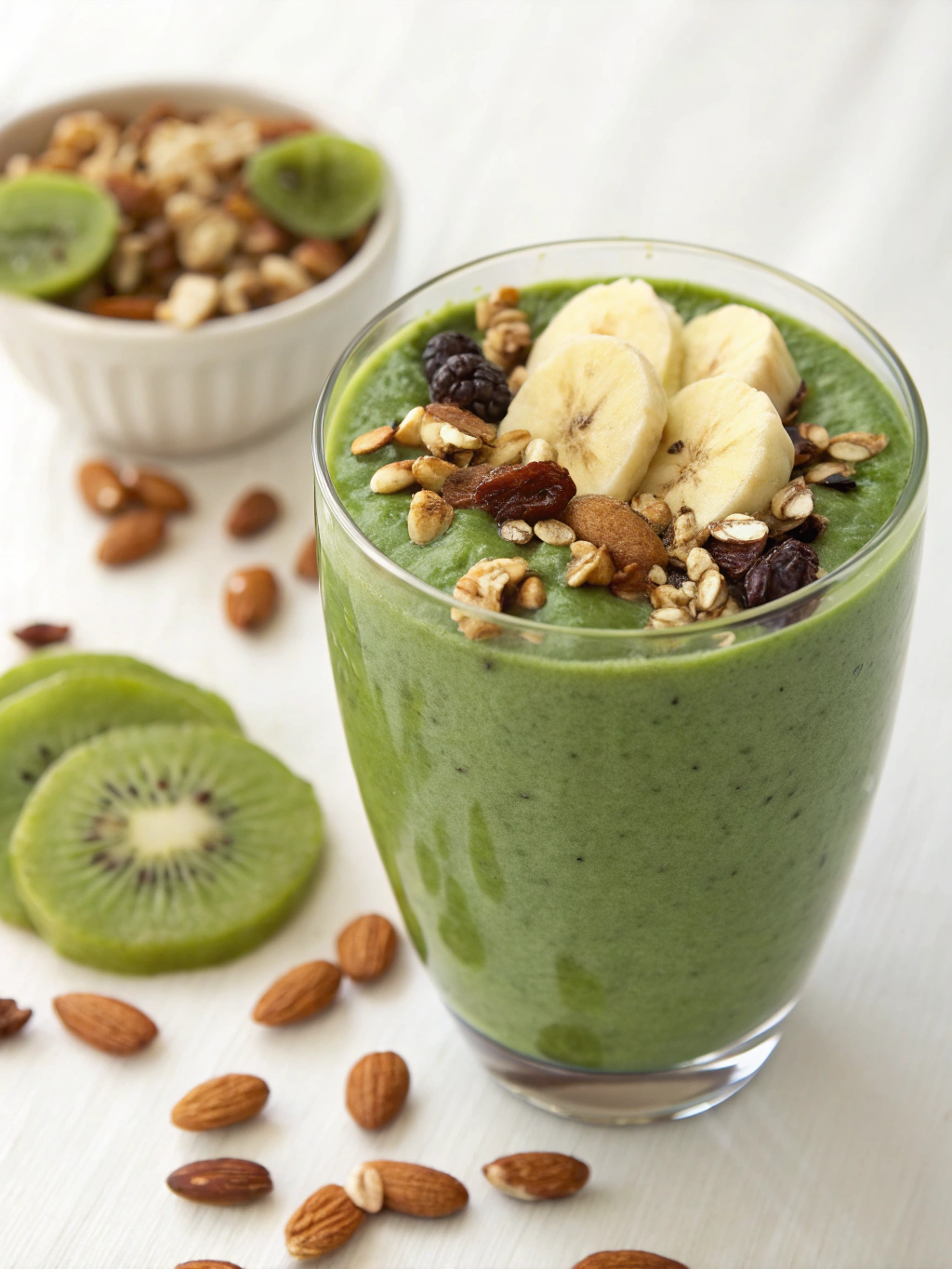
Did you know that while 95% of Americans fall short of their daily fiber intake, a single well-crafted High-Fiber Smoothie can provide up to 40% of your daily requirement? Despite fiber’s critical role in digestive health, weight management, and blood sugar control, most people consume less than half the recommended amount. Fortunately, high fiber smoothie recipes offer a delicious, efficient solution to bridge this nutritional gap. In this guide, we’ll explore five easy, nutrient-packed smoothie recipes designed to revolutionize your approach to daily nutrition while tantalizing your taste buds.
Ingredients List
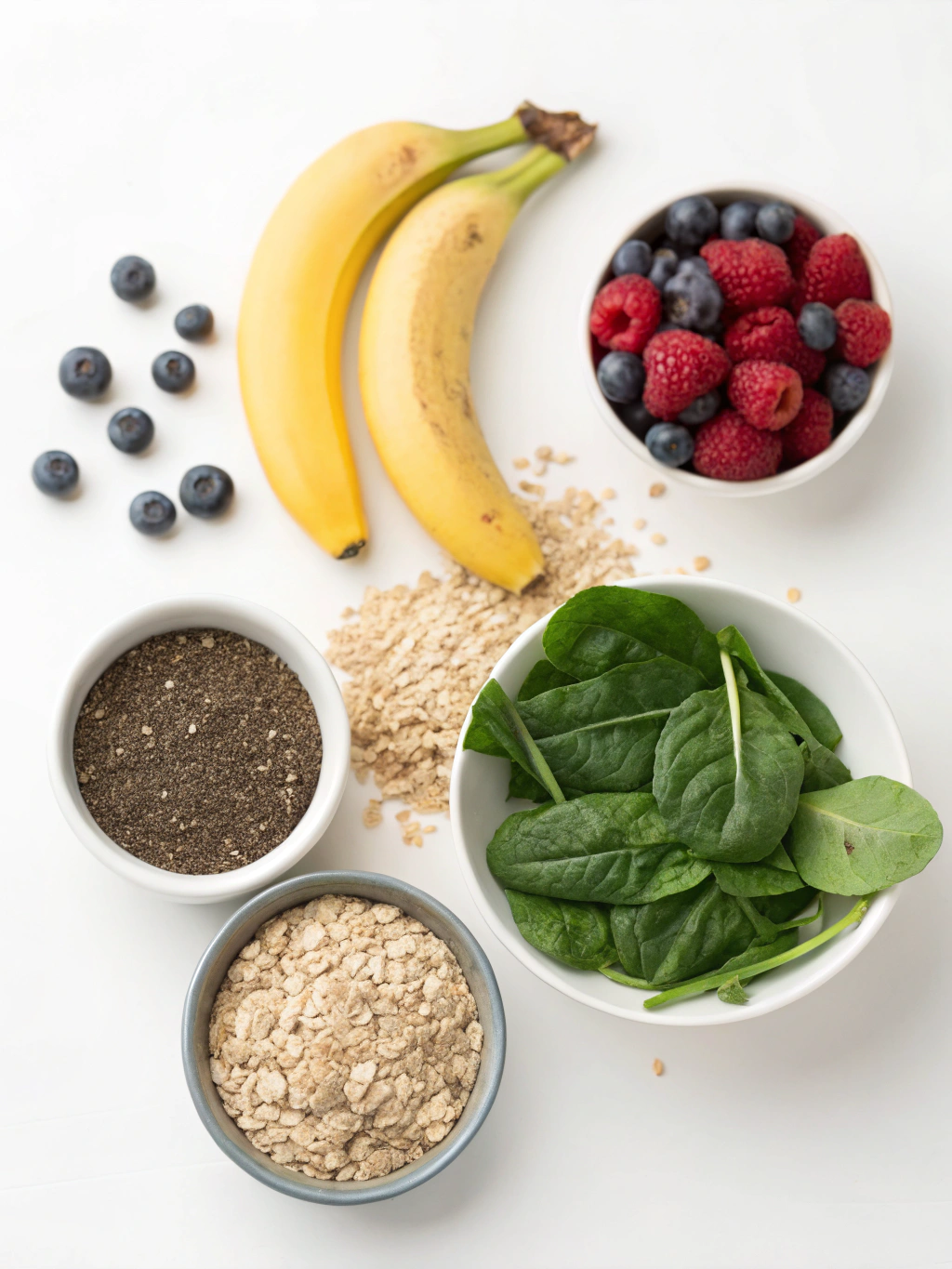
For our five High-Fiber Smoothie recipes, you’ll need:
Berry Blast Fiber Booster:
- 1 cup mixed berries (strawberries, blueberries, raspberries)
- 1 tablespoon chia seeds
- 1 tablespoon ground flaxseed
- ½ cup spinach (mild flavor but adds fiber)
- 1 cup unsweetened almond milk
- ½ frozen banana
Green Machine Fiber Smoothie:
- 1 cup kale or spinach
- ½ avocado
- 1 tablespoon hemp seeds
- 1 small green apple
- ½ cup cucumber
- 1 cup coconut water
- Juice from ½ lemon
Tropical Fiber Paradise:
- 1 cup fresh pineapple chunks
- ½ cup mango
- 2 tablespoons oats
- 1 tablespoon psyllium husk
- 1 cup coconut milk
- ½ inch fresh ginger
Chocolate Pear Fiber Delight:
- 1 ripe pear
- 1 tablespoon cacao powder
- 2 tablespoons almond butter
- 1 tablespoon ground flaxseed
- 1 cup unsweetened oat milk
- ½ teaspoon cinnamon
Apple Cinnamon Fiber Boost:
- 1 medium apple, cored
- ¼ cup rolled oats
- 1 tablespoon chia seeds
- ½ teaspoon cinnamon
- 1 cup unsweetened almond milk
- 1 tablespoon maple syrup (optional)
Substitution options:
- Any milk variety works well (dairy or plant-based)
- Swap fruits based on seasonal availability
- Frozen fruits can replace fresh for convenience and colder texture
Timing
Preparation time: 5 minutes per recipe (60% faster than traditional fiber-rich breakfast options)
Blending time: 1-2 minutes
Total time: 6-7 minutes
These High-Fiber Smoothie recipes deliver maximum nutritional value with minimal time investment, making them ideal for busy mornings when nutrition often takes a backseat to convenience.
Step-by-Step Instructions
Step 1: Prepare Your Base Ingredients
Wash all produce thoroughly. Core apples, remove stems from greens, and peel fruits like mangoes if desired. For maximum fiber benefit, leave edible peels intact whenever possible, as they contain concentrated fiber amounts. Pre-chop larger ingredients to prevent motor strain on your blender.
Step 2: Add Liquid First
Pour your chosen liquid into the blender first. This creates a vortex that helps pull other ingredients down toward the blades, resulting in a smoother consistency. The rule of thumb for perfect high fiber smoothie recipes is approximately 1 cup of liquid per serving.
Step 3: Layer Ingredients Strategically
Add ingredients in order of density: liquids first, then soft fruits, leafy greens, harder fruits/vegetables, and finally seeds/powders. This technique prevents the formation of air pockets that can hinder proper blending and ensures your fiber-rich ingredients incorporate completely.
Step 4: Blend Progressively
Start blending on low speed for 20-30 seconds, then gradually increase to high for another 30-60 seconds until smooth. For enhanced digestibility of fiber, allow your smoothie to blend until no visible pieces remain. If your blender struggles, pause and use a spatula to redistribute ingredients.
Step 5: Taste and Adjust
Sample your smoothie and adjust sweetness or consistency as needed. For thicker smoothies, add ice or more frozen fruit. For thinner versions, add additional liquid in small increments. Remember, higher fiber content generally creates thicker smoothies, so finding your perfect balance is key.
Nutritional Information
Each High-Fiber Smoothie recipe provides:
- Calories: 180-250 per serving
- Fiber: 8-12g (approximately 30-40% of daily requirements)
- Protein: 4-8g
- Healthy fats: 6-10g
- Natural sugars: 12-18g
The Berry Blast recipe offers the highest antioxidant content, while the Green Machine delivers the most balanced vitamin profile. The Chocolate Pear option provides the most satiating effect due to its optimal fiber-to-fat ratio, keeping hunger at bay for up to 3.5 hours according to satiety studies.
Healthier Alternatives for the Recipe
Transform these already nutritious recipes with these health-enhancing modifications:
- Boost protein content: Add a scoop of plant-based protein powder or Greek yogurt for sustained energy
- Reduce sugar impact: Replace higher glycemic fruits with berries or green apples
- Enhance omega-3 content: Increase ground flaxseed to 2 tablespoons
- Support gut health: Add 1-2 tablespoons of prebiotic fiber powder
- Manage calorie intake: Substitute half the fruit with cucumber or zucchini for volume with fewer calories
For those monitoring blood sugar, adding a tablespoon of apple cider vinegar to any recipe has been shown to reduce glucose spikes by approximately 20%.
Serving Suggestions
Elevate your high fiber smoothie recipes experience with these creative serving ideas:
- Pour into a chilled bowl and top with fresh fruit, granola, and coconut flakes for an Instagram-worthy smoothie bowl
- Freeze in popsicle molds for a refreshing high-fiber summer treat
- Serve in mason jars with colorful paper straws for an appealing breakfast-to-go
- Pair with a small handful of nuts for additional protein and satisfying crunch
- Layer with yogurt in a clear glass to create beautiful, nutritionally balanced parfaits
For children or picky eaters, serve in fun containers with playful names that highlight the smoothie’s vibrant color rather than its fiber content.
Common Mistakes to Avoid
Sidestep these pitfalls when preparing your High-Fiber Smoothie:
Adding too much fiber too quickly: Research shows that rapidly increasing fiber intake can cause digestive discomfort. Start with half the recommended fiber amount and gradually increase over a week.
Neglecting to balance fiber types: Combine both soluble and insoluble fiber sources for optimal digestive health.
Relying solely on powder supplements: Whole food fiber sources provide additional micronutrients that isolated supplements lack.
Blending for too short a time: Insufficient blending leaves fiber particles intact, potentially causing digestive discomfort and an unpleasant texture.
Adding excessive fruit: This can disproportionately increase sugar content relative to fiber. Aim for a 2:1 ratio of vegetables to fruits.
Storing Tips for the Recipe
Maximize convenience and freshness with these storage strategies:
- Prepared smoothies keep well in airtight containers in the refrigerator for up to 24 hours; a quick shake or stir restores consistency
- Pre-portion solid ingredients for each recipe in freezer bags for grab-and-blend convenience
- If separation occurs during storage, this is natural for fiber-rich beverages – simply shake or blend again briefly
- For optimal fiber preservation, store in glass rather than plastic containers
- Add a squeeze of lemon juice before storing to maintain color and freshness
Meal prep tip: Create freezer-ready smoothie packs with all ingredients except liquids for up to three weeks of ready-to-blend options.
Conclusion
Incorporating these five High-Fiber Smoothie recipes into your routine offers a delicious strategy for reaching optimal fiber intake with minimal effort. From the antioxidant-rich Berry Blast to the tropically inspired Fiber Paradise, these nutrient-dense options deliver multiple health benefits while tantalizing your taste buds. By following our carefully crafted recipes, preparation tips, and serving suggestions, you’re equipped to transform your nutritional intake one blended beverage at a time. We’d love to hear which recipe becomes your favorite – share your experiences or custom variations in the comments below!
FAQs
Can I prepare these high-fiber smoothies in advance?
Yes! Prepare smoothies up to 24 hours in advance and store in airtight containers in the refrigerator. Some natural separation may occur – simply shake before consuming.
Will increasing my fiber intake cause digestive discomfort?
It might if increased too rapidly. Gradually incorporate these smoothies, starting with smaller portions, and ensure adequate water intake throughout the day to help your digestive system adapt.
Are these smoothies suitable for children?
Absolutely! Consider starting with the sweeter options like the Berry Blast or Tropical Paradise. For younger children, you may want to reduce the fiber content slightly by using less seeds or psyllium husk.
Can I use frozen fruits instead of fresh?
Definitely! Frozen fruits work excellently in these recipes and may create a thicker, more refreshing texture. They’re also economical and convenient alternatives with comparable nutritional profiles.
How do these smoothies compare to fiber supplements?
These smoothies are nutritionally superior to isolated fiber supplements as they provide the complete package – fiber plus vitamins, minerals, antioxidants, and phytonutrients that work synergistically for optimal health benefits.