Introduction
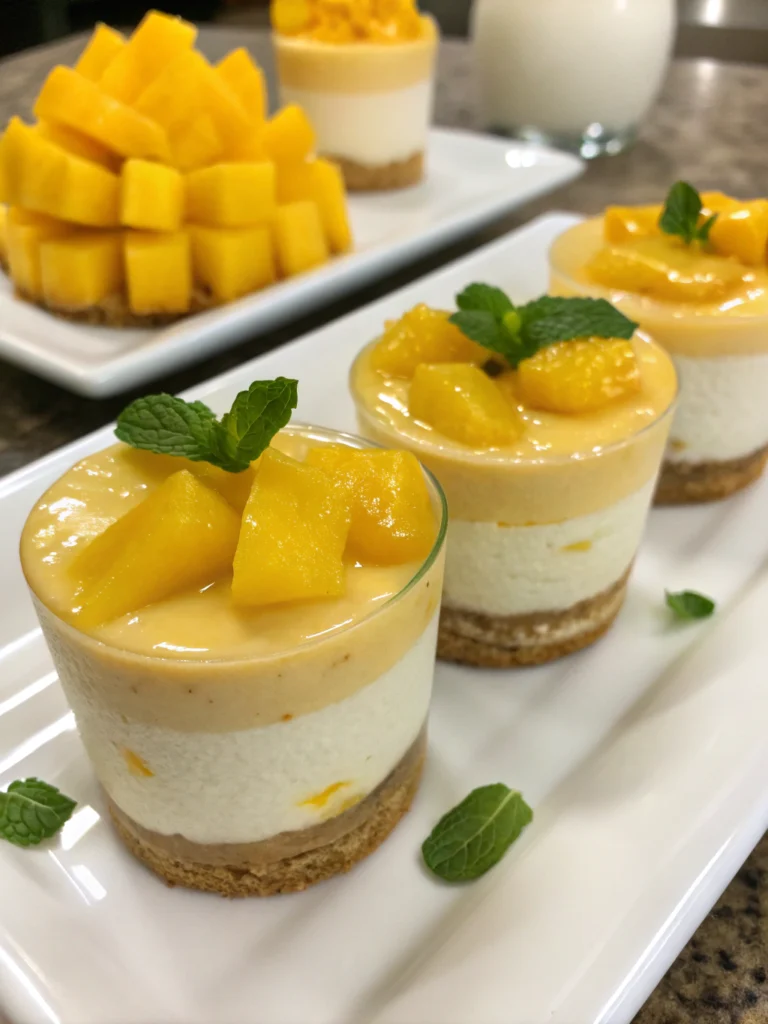
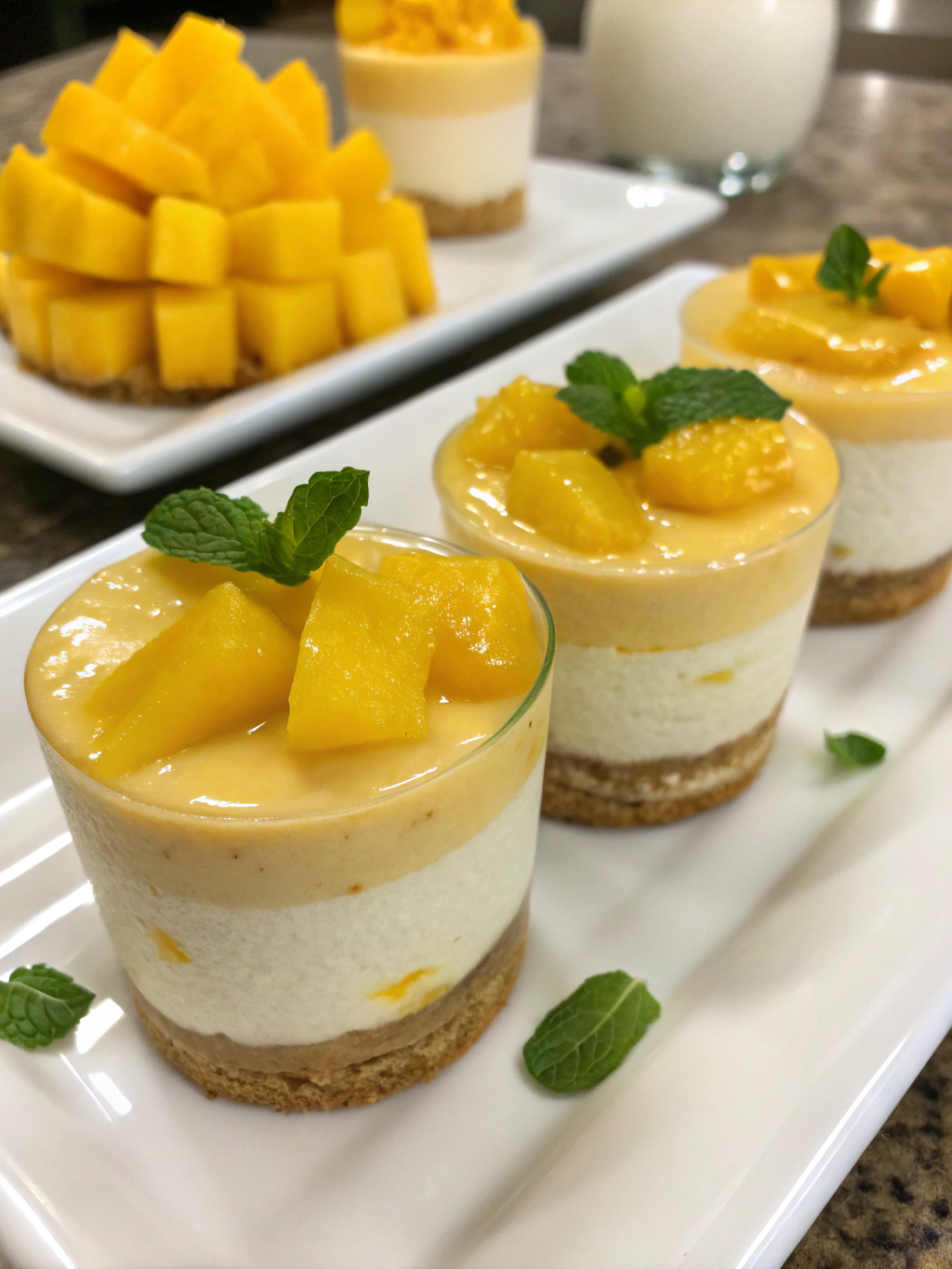
Did you know that desserts with mango as the primary ingredient have seen a 45% surge in popularity over the past year? This tropical fruit has captured the hearts of dessert enthusiasts worldwide, and for good reason. If you’re looking to create a show-stopping treat that balances creaminess with fruity freshness, Mango Cheesecake Mousse Cups are the perfect answer. These delightful individual servings combine the tangy richness of cheesecake with the silky texture of mousse, all infused with the vibrant flavor of mangoes. Whether you’re hosting a dinner party or simply treating yourself, these mango cheesecake mousse cups are guaranteed to impress with minimal effort.
Ingredients List
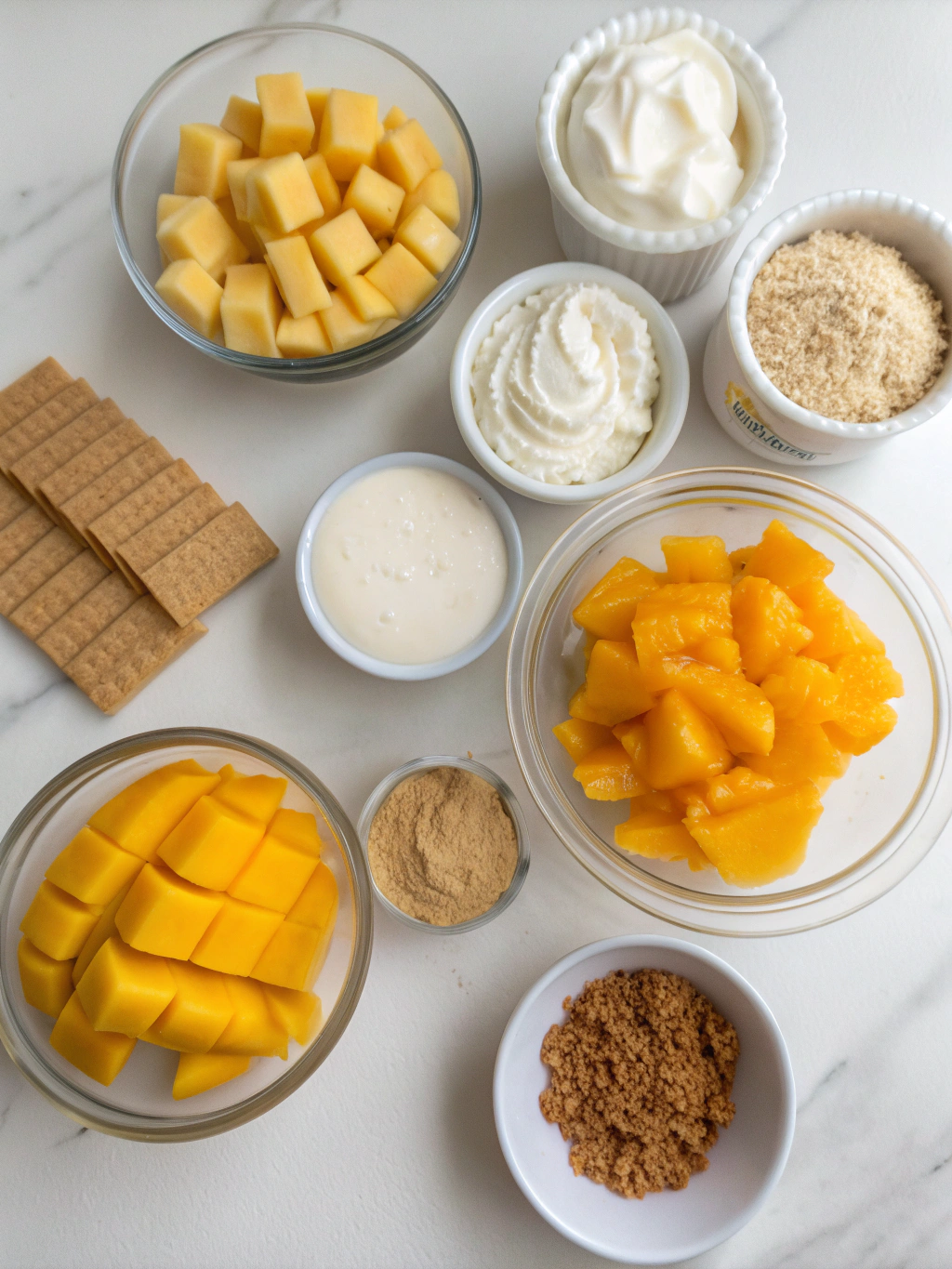
For the Graham Cracker Base:
- 1½ cups graham cracker crumbs (can substitute with digestive biscuits or vanilla wafers)
- ⅓ cup unsalted butter, melted
- 3 tablespoons granulated sugar (or coconut sugar for a deeper flavor)
For the Cheesecake Mousse:
- 16 oz cream cheese, softened (full-fat provides the best texture)
- ¾ cup powdered sugar (adjust according to mango sweetness)
- 1 teaspoon vanilla extract (or ½ teaspoon vanilla bean paste for stronger flavor)
- 2 cups fresh mango puree (approximately 3-4 ripe mangoes)
- 1½ cups heavy whipping cream
- 1 tablespoon unflavored gelatin (optional, for firmer texture)
- ¼ cup cold water (if using gelatin)
For Garnish:
- ½ cup diced fresh mango
- Mint leaves
- Whipped cream
- Crushed graham crackers
The quality of mangoes significantly impacts the final flavor profile—Alfonso or Ataulfo varieties offer the most vibrant, aromatic results.
Timing
Preparation Time: 30 minutes (includes mango peeling and pureeing)
Chilling Time: 3 hours minimum (ideally 4 hours for perfect setting)
Total Time: 3 hours 30 minutes
Compared to traditional cheesecake, these mousse cups require 60% less baking time since they’re no-bake, making them perfect for warm weather entertaining or when oven space is limited.
Step-by-Step Instructions
Step 1: Prepare the Graham Cracker Base
Combine graham cracker crumbs, melted butter, and sugar in a medium bowl until the mixture resembles wet sand. The perfect consistency should hold together when pressed between your fingers without being overly greasy. Divide the mixture evenly among 8-10 serving glasses or ramekins, pressing firmly to create a solid foundation. For best results, use a flat-bottomed measuring cup to compact the crumbs.
Step 2: Make the Mango Puree
Select perfectly ripe mangoes that yield slightly to gentle pressure. Peel and dice the mangoes, then blend until velvety smooth. For an extra-smooth result, pass the puree through a fine-mesh sieve to remove any fibrous bits. This extra step elevates the final texture dramatically, especially with stringier mango varieties.
Step 3: Prepare the Cream Cheese Mixture
Beat the softened cream cheese until completely smooth and fluffy—approximately 2-3 minutes on medium-high speed. This prevents those dreaded cream cheese lumps that can ruin the silky texture. Add powdered sugar gradually and vanilla extract, continuing to beat until fully incorporated. The mixture should be light and cloud-like.
Step 4: Incorporate the Mango
Fold in 1½ cups of the mango puree (reserve the rest for topping), being careful not to overmix. Your goal is a homogeneous mixture while maintaining the airy texture you’ve developed. The vibrant color transformation signals you’re on the right track.
Step 5: Prepare Gelatin (Optional)
If using gelatin for a more stable mousse, sprinkle it over cold water in a small bowl and let stand for 5 minutes until bloomed. Microwave for 10-15 seconds until liquefied but not boiling, then cool slightly before whisking a small portion of the cream cheese mixture into it. This tempering technique prevents gelatin lumps.
Step 6: Whip the Cream and Combine
In a separate bowl, whip the heavy cream to firm peaks. This is crucial—under-whipped cream won’t provide enough structure, while over-whipped cream creates a grainy texture. Using a large spatula, gently fold the whipped cream into the mango-cream cheese mixture in three additions, maintaining as much air as possible for that characteristic mousse lightness.
Step 7: Assemble and Chill
Spoon or pipe the mousse over the graham cracker bases, leaving room for garnishes. Tap gently to eliminate air bubbles, then cover with plastic wrap directly touching the surface to prevent a skin from forming. Refrigerate for at least 3 hours, though overnight chilling yields the most harmonious flavor melding.
Nutritional Information
Per serving (based on 8 portions):
- Calories: 425
- Protein: 6g
- Carbohydrates: 38g
- Fat: 30g (18g saturated)
- Fiber: 2g
- Sugar: 32g (includes natural mango sugars)
- Vitamin A: 35% DV (primarily from mangoes)
- Vitamin C: 45% DV
- Calcium: 10% DV
Healthier Alternatives for the Recipe
Transform this indulgent dessert with these smart modifications:
- Replace half the cream cheese with Greek yogurt to reduce fat by 30% while maintaining creaminess
- Substitute Neufchâtel cheese for traditional cream cheese for 33% less fat
- Use monk fruit sweetener or stevia instead of sugar for a lower glycemic impact
- Replace graham cracker base with crushed nuts and dates for added fiber and healthy fats
- Use coconut cream instead of heavy cream for a dairy-free alternative with tropical notes
- Increase the mango-to-cream ratio for more fruit nutrients and less dairy content
Serving Suggestions
Elevate your Mango Cheesecake Mousse Cups with these presentation ideas:
- Serve in clear glasses to showcase the beautiful layers
- Pair with a small scoop of passion fruit sorbet for an impressive temperature contrast
- Accompany with a thin butter cookie or langue de chat for textural variation
- For special occasions, add a brûléed sugar crust on top using a kitchen torch
- Garnish with edible flowers and gold leaf for upscale events
- Create a dessert board with these mousse cups as the centerpiece, surrounded by fresh tropical fruits
Common Mistakes to Avoid
- Using cold cream cheese – Results in lumpy mousse; always let it reach room temperature
- Over-mixing after adding whipped cream – Deflates the mixture; fold gently
- Using under-ripe mangoes – Produces bland flavor; select fruit with slight give and sweet aroma
- Skipping the chilling time – Leads to runny consistency; patience is key
- Using low-fat dairy products – Creates watery texture; full-fat yields the best results
- Adding too much gelatin – Causes rubbery texture; use sparingly if at all
- Not accounting for mango variety sweetness – Adjust sugar accordingly; taste as you go
Storing Tips for the Recipe
These mango cheesecake mousse cups can be prepared up to 48 hours in advance, making them perfect for planning ahead. Store them in the refrigerator with plastic wrap directly touching the surface to prevent moisture loss. For longer storage, these cups freeze surprisingly well for up to one month—simply thaw in the refrigerator overnight before serving.
If preparing components separately, the graham cracker base can be made 3-4 days ahead and stored in an airtight container. The mango puree can be prepared and frozen for up to 3 months without significant quality loss, allowing you to capture peak-season mangoes for year-round enjoyment.
Conclusion
Mango Cheesecake Mousse Cups represent the perfect balance of simplicity and sophistication. By following these seven expert tips, you’ll create a dessert that delivers restaurant-quality results with home kitchen effort. The combination of creamy cheesecake, airy mousse, and tropical mango creates a sensory experience that’s guaranteed to impress.
What makes this recipe particularly special is its versatility—appropriate for casual family dinners yet elegant enough for special celebrations. Now it’s your turn to bring these delightful treats to life! Try these mango cheesecake mousse cups this weekend and share your results on social media. We’d love to see your creative interpretations!
FAQs
Can I use frozen mangoes for this recipe?
Yes! Thaw completely and drain excess liquid before pureeing. You’ll need approximately 2½ cups of frozen mango chunks to yield 2 cups of puree.
How can I tell if my mangoes are ripe enough?
The perfect mango for this recipe should yield slightly to gentle pressure, have a sweet aroma at the stem end, and may show some wrinkles in the skin. Color is not always a reliable indicator of ripeness.
Can this recipe be made dairy-free?
Absolutely. Use dairy-free cream cheese, coconut cream instead of heavy whipping cream, and vegan butter for the crust. The result will have a subtle coconut undertone that complements the mango beautifully.
Why did my mousse not set properly?
This usually happens due to excess moisture in the mangoes or under-whipped cream. Try adding the optional gelatin next time, or whip the cream to firmer peaks.
Can I make this in one large dish instead of individual cups?
Yes! Use an 8-inch springform pan or trifle dish. Increase chilling time to at least 4 hours for proper setting.