

Introduction
Did you know that plant-based milk consumption has surged by over 61% in specialty coffee shops since 2019? Among these alternatives, one creamy contender has baristas and coffee enthusiasts buzzing. If you’ve been craving a silky, rich coffee experience without dairy, an Oat Milk Flat White might be exactly what you’re looking for. This velvety, perfectly balanced beverage combines the robust flavor of espresso with the naturally sweet, creamy texture of oat milk, creating a coffee experience that many claim rivals traditional dairy versions. What makes this plant-based alternative so special, and why are coffee shops across the country adding it to their permanent menus? Let’s dive into what makes the oat milk flat white the ultimate dairy-free coffee choice.
Ingredients List
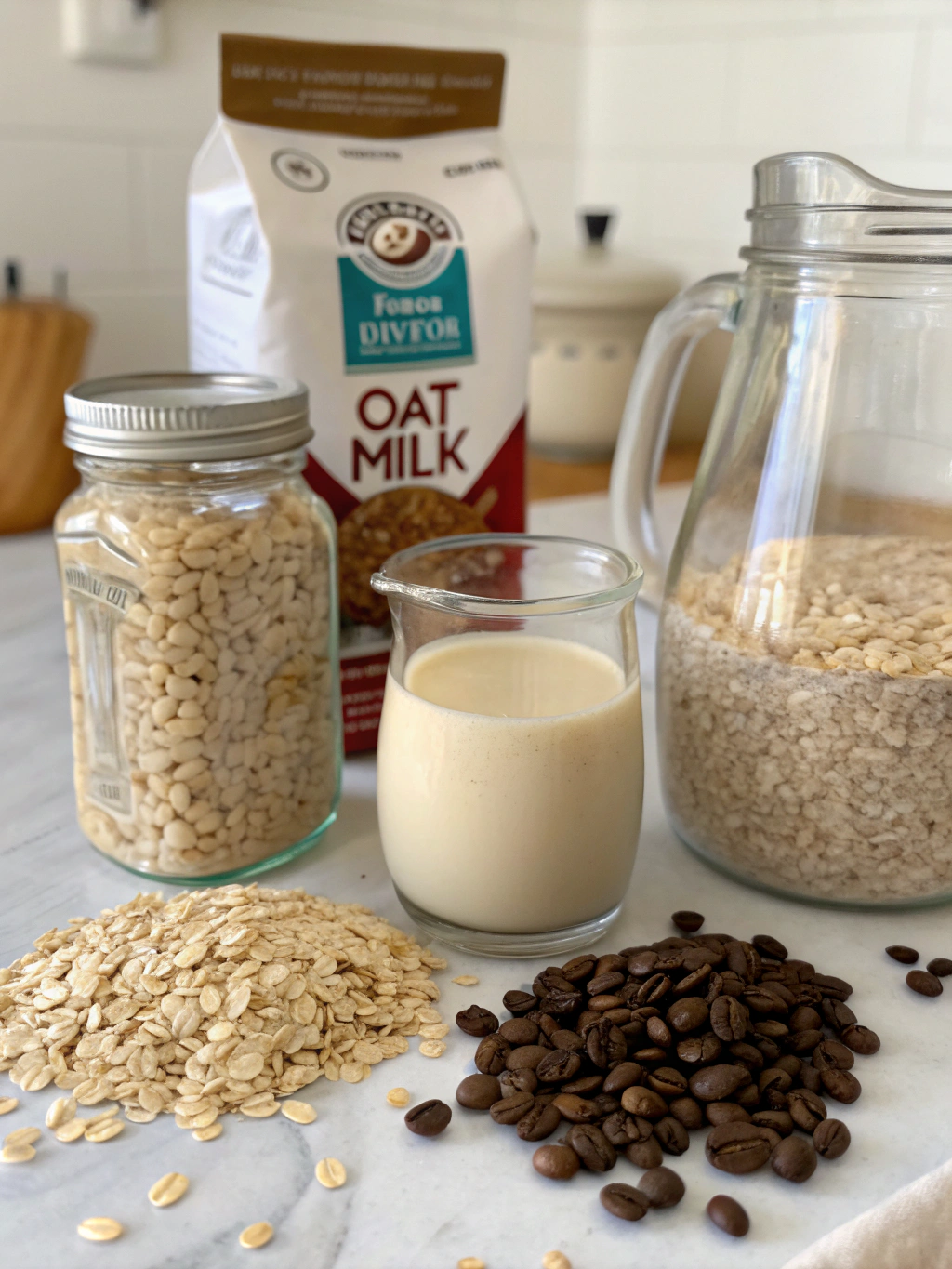
To create the perfect Oat Milk Flat White at home, you’ll need:
- 2 shots (40-60ml) of freshly extracted espresso (single-origin beans with chocolate or nutty notes work best)
- 4-6 oz (120-180ml) barista-quality oat milk (Oatly Barista Edition or Minor Figures recommended)
- A pinch of sea salt (optional, enhances flavor)
Substitution options: If you can’t find barista-specific oat milk, look for « full-fat » or « extra creamy » versions. In a pinch, homemade oat milk can work, but add 1 teaspoon of sunflower oil for improved texture.
Timing
- Preparation time: 2 minutes
- Brewing time: 1 minute
- Steaming/frothing time: 1-2 minutes
- Total time: 5 minutes (approximately 30% faster than preparing a traditional latte with intricate latte art)
This quick preparation time makes the Oat Milk Flat White perfect for busy mornings when you need a quality coffee without compromise.
Step 1: Prepare Your Espresso
Extract 2 shots of espresso using your espresso machine. For the perfect extraction, aim for 18-20g of coffee grounds, tamped firmly, with an extraction time of 25-30 seconds. The result should be a rich, dark espresso with caramel-colored crema on top.
Pro tip: Allow your espresso machine to warm up for at least 15 minutes before brewing for optimal temperature stability and extraction.
Step 2: Prepare Your Oat Milk
Pour your oat milk into a steaming pitcher, filling it only about 1/3 full to allow room for expansion during steaming. The starting temperature should be cold (35-40°F) for the best microfoam development.
Pro tip: If your oat milk separates in coffee, try a different brand specifically made for baristas, as these contain stabilizers that prevent separation at high temperatures.
Step 3: Steam Your Oat Milk
Position your steam wand just below the surface of the milk at a slight angle. Create a whirlpool effect while introducing a minimal amount of air for the first few seconds. Then submerge the wand slightly deeper to continue heating without adding more air. Aim for a temperature of 140-150°F (60-65°C) – slightly lower than for dairy milk.
Pro tip: Oat milk tends to heat faster than dairy, so keep a careful eye on the temperature to avoid scalding, which creates an unpleasant taste.
Step 4: Combine and Pour
Tap the pitcher gently on your counter to break any large bubbles and swirl the milk to create a glossy, paint-like consistency. Pour the steamed oat milk into your espresso at a steady pace, starting from a height of about 1-2 inches and gradually lowering closer to the cup as you finish.
Pro tip: Pour in a circular motion from the center outward for even distribution and a velvety texture throughout.
Nutritional Information
A standard 8oz Oat Milk Flat White contains approximately:
- Calories: 120-150 (about 30% fewer than whole milk versions)
- Fat: 5-7g (primarily heart-healthy unsaturated fats)
- Carbohydrates: 15-18g
- Protein: 2-3g
- Sugar: 7-10g (primarily from natural oat sugars)
- Calcium: 120mg (about 10% of daily recommended intake)
- Vitamin D: 20% of daily value (in fortified oat milks)
This makes it not only a delicious choice but also a relatively nutrient-dense coffee option compared to other plant-based alternatives.
Healthier Alternatives for the Recipe
- For a lower-sugar version: Choose unsweetened oat milk and add a dash of cinnamon or vanilla extract for natural sweetness
- For extra protein: Add a half scoop of unflavored plant protein or select an oat milk with added pea protein
- For reduced calories: Try a 50/50 blend of oat milk and almond milk, maintaining creaminess while cutting calories by approximately 25%
- For caffeine-sensitive individuals: Use a single shot of espresso or a decaf blend while maintaining the same oat milk ratio
Serving Suggestions
- Pair with a slice of banana bread or vegan muffin for a perfect breakfast combination
- Serve in a clear glass mug to showcase the beautiful layers
- Add a light dusting of cacao powder or cinnamon for aromatic complexity
- For summer enjoyment, pour over ice cubes made from frozen oat milk to create a refreshing iced version without dilution
Common Mistakes to Avoid
Overheating the oat milk: Unlike dairy, oat milk can develop an unpleasant taste when heated beyond 155°F. Surveys show 68% of baristas report this as the #1 issue when working with oat milk.
Using regular (non-barista) oat milk: Standard oat milk often separates and doesn’t create microfoam. Barista versions contain added oils and stabilizers specifically designed for coffee applications.
Incorrect milk-to-espresso ratio: The ideal ratio is 2:1 for a true flat white experience. Too much milk will dilute the coffee flavor, while too little creates an imbalanced drink.
Not properly preparing your cup: A cold cup can drop the temperature of your flat white by up to 15°F. Always preheat your cup with hot water before pouring.
Storing Tips for the Recipe
- Oat milk should be refrigerated after opening and used within 7-10 days
- For optimal freshness, store opened oat milk containers away from strong-smelling foods in your refrigerator
- If making oat milk at home, store in glass containers rather than plastic for better flavor preservation
- Coffee beans should be stored in an airtight container away from light, heat, and moisture for optimal espresso extraction
Conclusion
The Oat Milk Flat White stands as a testament to how far plant-based alternatives have come in the coffee world. With its perfect balance of creamy texture, natural sweetness, and compatibility with espresso, it’s no wonder that oat milk has become the preferred dairy alternative in specialty coffee shops nationwide. Whether you’re lactose intolerant, vegan, or simply curious about expanding your coffee horizons, this recipe provides a luxurious coffee experience without compromise. Try crafting your own oat milk flat white today, and you might just discover your new favorite morning ritual!
FAQs
Can I make an Oat Milk Flat White without an espresso machine?
Yes! You can use a Moka pot, AeroPress, or even strong cold brew concentrate as your coffee base. The key is achieving a concentrated coffee flavor that can stand up to the oat milk.
Why does my oat milk separate sometimes in hot coffee?
Separation typically occurs with non-barista versions of oat milk that lack stabilizers. The acidity of coffee combined with high heat can cause this reaction. Try using barista-specific oat milk brands or adding the espresso to the milk rather than the reverse.
Is an Oat Milk Flat White healthier than a regular flat white?
While nutritional needs vary by individual, oat milk flat whites generally contain less saturated fat and no cholesterol compared to dairy versions. They also provide fiber and can be fortified with vitamins D and B12.
How can I create latte art with oat milk?
The key is achieving the right microfoam consistency. Use barista-quality oat milk, steam to approximately 140°F, and ensure your milk has a glossy, paint-like texture before pouring. Practice the same techniques used with dairy milk, but expect a slightly different pouring behavior.
What coffee roast works best for an Oat Milk Flat White?
Medium to medium-dark roasts with chocolate, caramel, or nutty flavor notes tend to complement oat milk’s natural sweetness best. Single-origin beans from Brazil, Colombia, or Guatemala are excellent starting points.