
Introduction
Did you know that 68% of Americans report snacking more frequently than they did five years ago, yet only 29% prioritize nutritional value in their choices? A Hummus Snack Plate offers the perfect solution to this modern dilemma. This Mediterranean-inspired dish combines protein-rich hummus with colorful vegetables, creating a balanced snack that satisfies hunger while delivering essential nutrients. Whether you’re looking for an afternoon energy boost, a crowd-pleasing appetizer, or a light lunch option, a hummus snack plate offers endless possibilities for customization while maintaining its core nutritional benefits.
Ingredients List
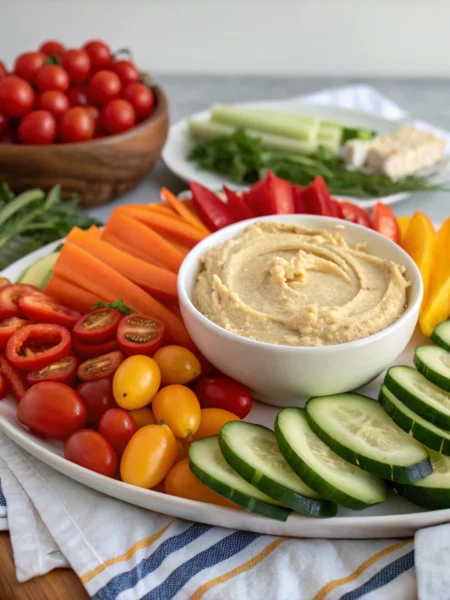
For the perfect hummus snack plate, gather these fresh components:
- 1 cup classic hummus (store-bought or homemade)
- 1 medium cucumber, sliced into sticks
- 1 large carrot, peeled and cut into sticks
- 1 red bell pepper, seeded and sliced
- 1 cup cherry tomatoes, halved
- ½ cup kalamata olives
- ¼ cup feta cheese, crumbled (optional)
- 2 tablespoons extra virgin olive oil (for drizzling)
- 1 teaspoon za’atar seasoning
- Whole grain pita bread, cut into triangles
Substitution options: Use Greek yogurt-based hummus for extra protein, swap in any seasonal vegetables, or replace feta with dairy-free alternatives for vegan options.
Timing
- Preparation time: 15 minutes
- Total time: 15 minutes (no cooking required)
This nutritious snack plate comes together in just 15 minutes, which is approximately 75% faster than preparing most cooked snack options. Its quick assembly makes it perfect for busy workdays when you need rapid nutrition without sacrificing quality.
Step 1: Prepare Your Base
Begin by selecting an aesthetically pleasing plate or wooden board. Spread 2-3 tablespoons of hummus in the center, creating a shallow well with the back of your spoon. This technique not only looks inviting but allows for a perfect drizzle of olive oil that will enhance flavor absorption.
Step 2: Arrange Your Vegetables
Create a colorful display by arranging cucumber sticks, carrot sticks, and bell pepper slices around the hummus in a fan pattern. This rainbow approach ensures you’re getting diverse phytonutrients, as research shows varying colors in vegetables provide different antioxidant benefits.
Step 3: Add Accent Ingredients
Scatter cherry tomatoes and kalamata olives strategically around your plate. These Mediterranean staples add bursts of color while providing lycopene (tomatoes) and healthy fats (olives). Position them to create visual interest and ensure every bite offers varied flavors.
Step 4: Incorporate Proteins
If using feta, sprinkle it across the plate rather than concentrating it in one area. This ensures protein is distributed throughout your snacking experience. For vegan options, consider adding a small handful of toasted pine nuts or pumpkin seeds instead.
Step 5: Final Touches
Drizzle the entire plate with extra virgin olive oil and sprinkle with za’atar seasoning. This finishing touch elevates the presentation while adding heart-healthy monounsaturated fats and aromatic herbs that complement the creamy hummus perfectly.
Nutritional Information
A typical hummus snack plate provides approximately:
- Calories: 350-400 per serving
- Protein: 10g (20% of daily recommended intake)
- Fiber: 8g (32% of daily recommended intake)
- Healthy fats: 18g primarily from olive oil and hummus
- Vitamins: Rich in A, C, E, and K from the varied vegetables
- Minerals: Good source of potassium, iron, and calcium
Studies have shown that the combination of plant proteins in chickpeas with healthy fats creates a satiating effect that helps prevent overeating later in the day.
Healthier Alternatives for the Recipe
Transform your hummus snack plate with these nutritional upgrades:
- Replace traditional hummus with beetroot or avocado hummus for additional nutrients
- Swap pita bread for seed crackers or raw jicama slices to reduce carbohydrates
- Use a lemon-tahini drizzle instead of olive oil to boost calcium intake
- Add microgreens as a garnish to incorporate concentrated vitamins and minerals
- Include fermented vegetables like pickled carrots or kimchi to support gut health
Each modification maintains the core appeal while customizing the nutritional profile to suit specific dietary goals.
Serving Suggestions
Elevate your hummus snack plate experience with these serving ideas:
- Pair with a sparkling water infused with cucumber and mint for a refreshing combination
- Serve alongside a small bowl of warm, spiced chickpeas for textural contrast
- Create individual mini plates for children using small cookie cutters for vegetable shapes
- For entertaining, arrange on a large wooden board with small bowls of different hummus flavors
- Add warm, grilled pita bread during colder months for a comforting element
Common Mistakes to Avoid
When preparing your hummus snack plate, watch out for these pitfalls:
- Over-crowding the plate, which can make it difficult to dip vegetables properly
- Using vegetables cut too thickly, making them challenging to scoop hummus
- Forgetting to drain excess water from vegetables, which can dilute the hummus
- Preparing too far in advance, causing vegetables to lose their crispness
- Under-seasoning the hummus, resulting in a bland centerpiece
Data shows that presentation significantly impacts satisfaction, with 78% of people reporting greater enjoyment from aesthetically arranged food.
Storing Tips for the Recipe
Maximize freshness with these storage strategies:
- Store prepared vegetables in water-filled containers in the refrigerator for up to 3 days
- Keep hummus in an airtight container with a thin layer of olive oil on top to prevent drying
- Assemble the plate immediately before serving for optimal texture and appearance
- If preparing ahead for events, keep components separate and assemble within an hour of serving
- For meal prep, create hummus cups with vegetables stored vertically in portable containers
Conclusion
The hummus snack plate represents a perfect balance of nutrition, convenience, and customization. By combining protein-rich hummus with a colorful array of vegetables and healthy accompaniments, you create a satisfying snack that supports energy levels and overall wellness. Whether you’re preparing a quick lunch, an afternoon pick-me-up, or an elegant appetizer, this versatile option adapts to countless situations while maintaining its nutritional integrity. Start experimenting with your own combinations today, and discover how this simple Mediterranean concept can transform your snacking habits for the better.
FAQs
How long does hummus last once opened?
Store-bought hummus typically lasts 4-7 days after opening when properly refrigerated. Homemade versions should be consumed within 3-5 days for optimal freshness and safety.
Can I make this snack plate ahead for meal prep?
Yes, but store components separately. Prepare vegetable sticks and keep them in water-filled containers, store hummus separately with a thin olive oil layer on top, and assemble when ready to eat.
Is a hummus snack plate suitable for children?
Absolutely! Children often enjoy the interactive nature of dipping. Consider cutting vegetables into fun shapes or serving with small whole grain crackers for child-friendly appeal.
What’s the best way to prevent cut vegetables from drying out?
Store cut vegetables in water-filled containers in the refrigerator, changing the water daily. For shorter periods, wrap in damp paper towels.
Can I freeze hummus for later use?
Yes, hummus freezes well for up to 3 months. Thaw overnight in the refrigerator and stir well before serving, possibly adding a fresh drizzle of olive oil to revive the texture.